Who we are

The National and Kapodistrian University of Athens (NKUA) houses Core Facilities that serve as a crucial resource for addressing analytical challenges in research. These facilities boast cutting-edge methodologies and analytical instruments, operated by a team of highly skilled professionals. Situated within the School of Sciences at NKUA, this center of excellence provides invaluable support to researchers. Furthermore, the university’s commitment to comprehensive research support extends beyond this primary location. Through an extensive core facility network, additional resources are accessible at various NKUA faculties and the Attikon hospital, enhancing the institution’s research capabilities and fostering collaborative scientific endeavors.
Core Facilities

Mass Spectrometry Unit
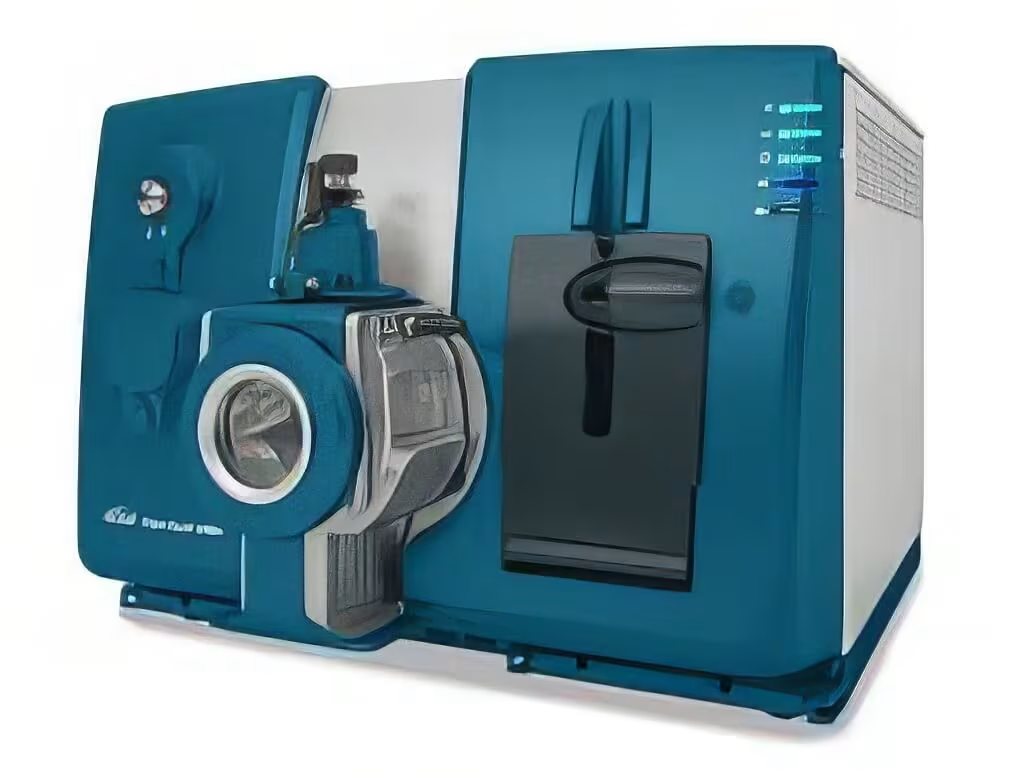
The Mass Spectrometry Unit (MSU) of the School of Sciences horizontal Core Facilities at National and Kapodistrian University of Athens, is dedicated to the exploration and characterization of chemical substances across diverse scientific fields. Equipped with advanced instrumentation, the unit supports studies on biomolecules, clinical samples, food and environmental matrices, in addition to a wide range of synthetic and natural compounds.
The MSU provides advanced capabilities in proteomics, lipidomics, metabolomics, elemental analysis (ICP-MS), and comprehensive sample profiling, offering a holistic view of chemical and biological systems. By combining cutting-edge technology with innovative methodologies, the unit delivers high-quality analytical services, fosters collaborations, and contributes to advancing research in chemistry, biology, environmental sciences, food research, and clinical studies.
Crystallography Unit
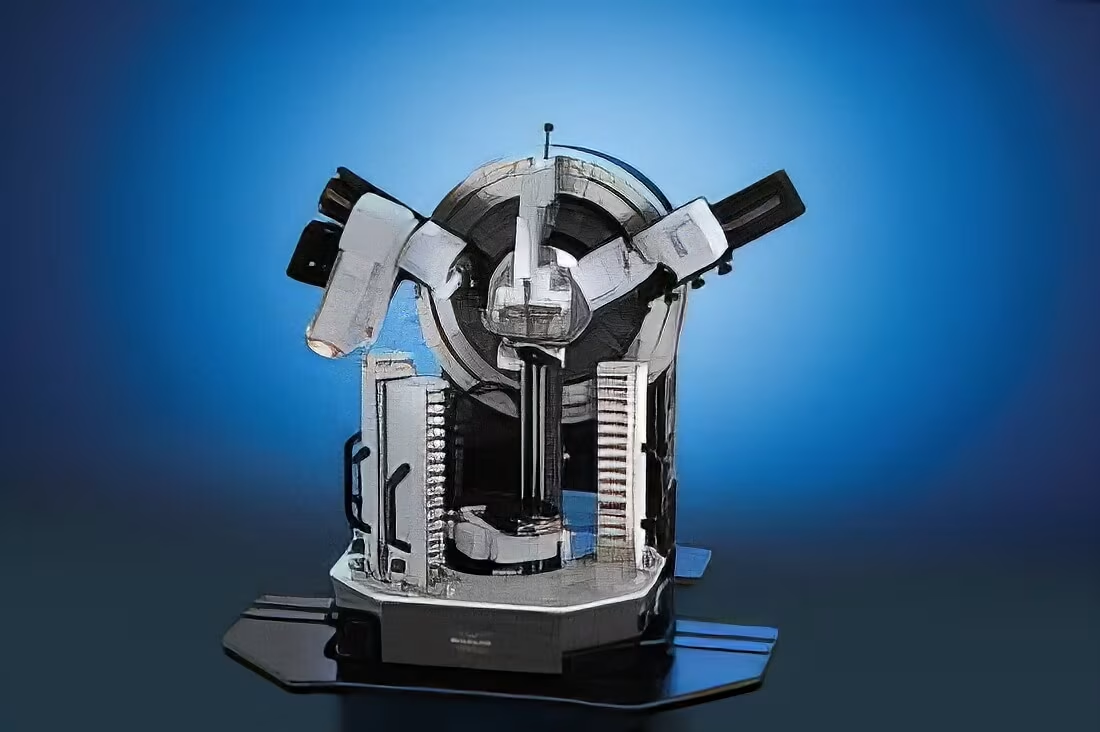
The Crystallography Unit is a national leading, unique facility providing a service and researching in chemical crystallography and its disciplines.
It consists of two main units as follows:
- SC-XRD Unit
- p-XRD Unit
Nuclear Magnetic Resonance Unit
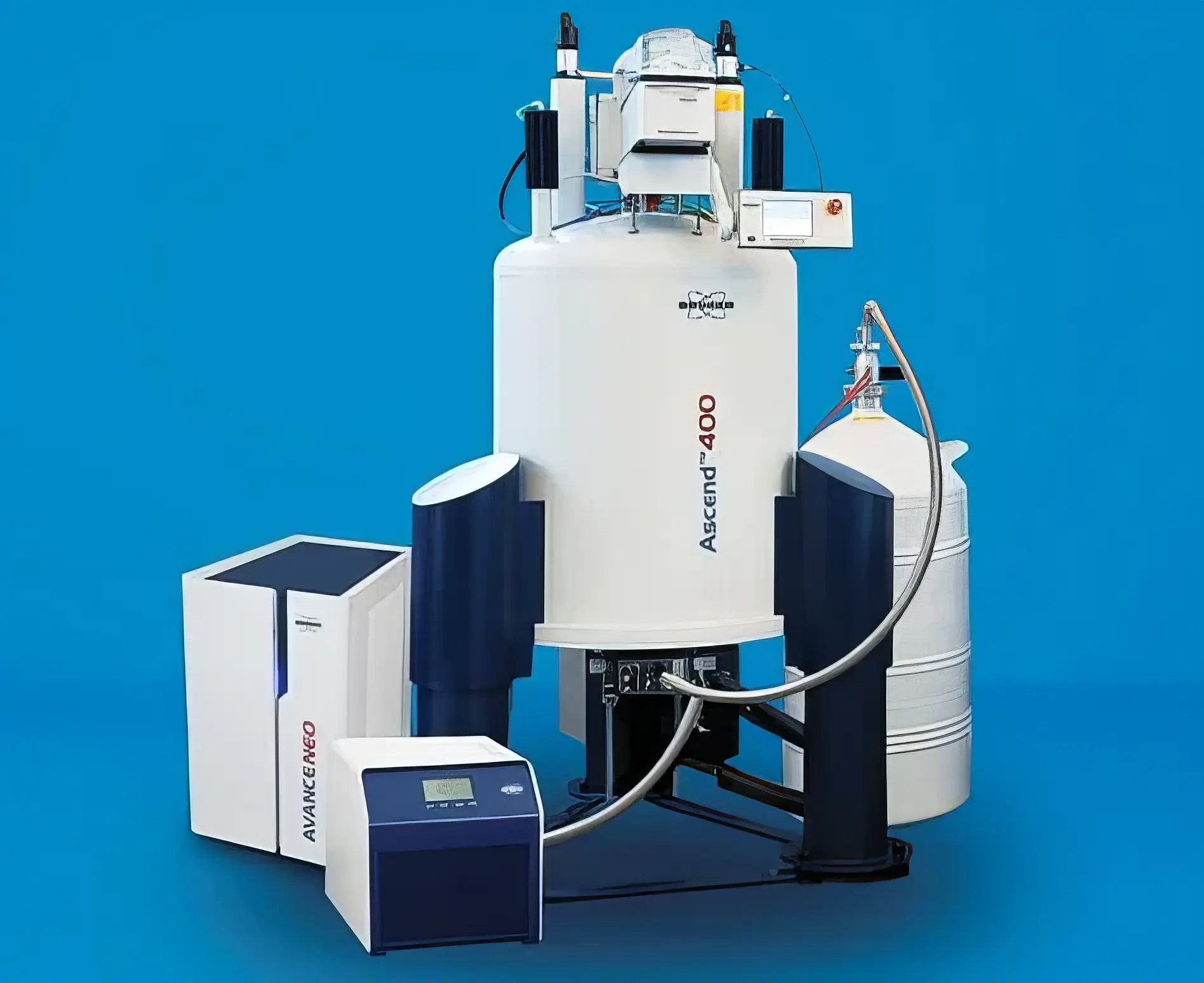
The Nuclear Magnetic Resonance Unit (NMRU) at the National and Kapodistrian University of Athens is part of the horizontal infrastructure of the School of Sciences. The purpose of the facility is to serve the research interests of the academic community, and all other interested parties, in the field of Nuclear Magnetic Resonance. Collaborations including joint publications, research proposals, and funding are highly encouraged. Moreover, the goal of the NMR Core Facility is to offer training in state-of-the-art NMR instrumentation and software. The available NMR systems are equipped with different state-of-the-art, highly sensitive probes for conducting experiments on liquid, solid and semi-solid samples. It is possible to study small molecules (e.g. drugs, synthetic compounds, natural products, etc.), polymers, as well as the interactions of small molecules with biomolecules (e.g. proteins, nucleic acids). The unit consists of two subunits: The 500 MHz and the 400 MHz NMR.
Imaging unit
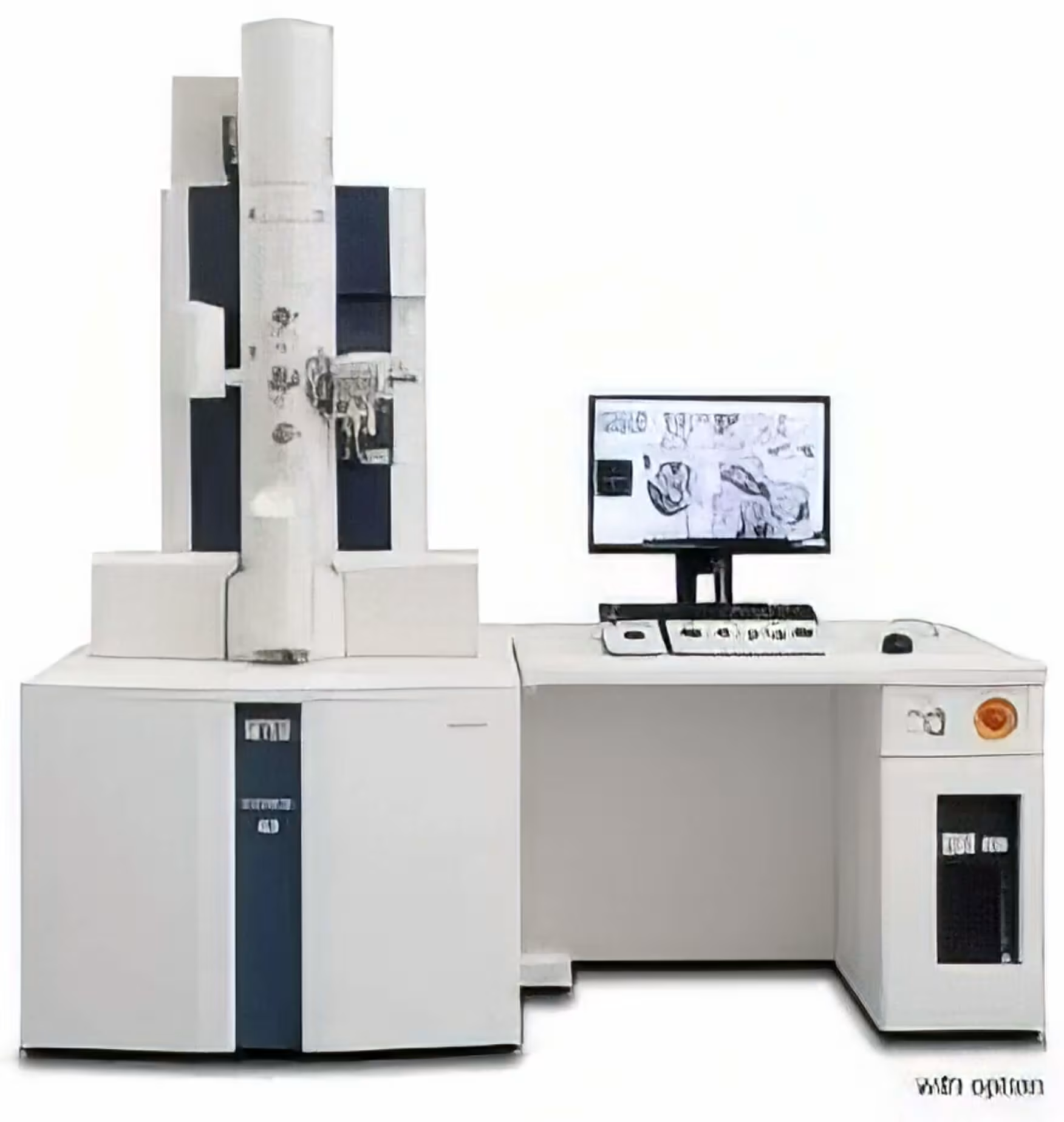
The Imaging Unit (IU) of the NKUA Core Facility has been established at the premises of the School of Sciences, NKUA. The preparatory phase of different samples viewing has started in Autumn 2024 and it is expected that the IU will be in full operation capacity by early summer 2025. We aim to provide state-of-the-art high-resolution light and electron microscope imaging, serving the needs of all NKUA schools and beyond. Currently, our team consists of three members, all with high experience and expertise in Imaging techniques, including Electron Microscopy (sample preparation and viewing). At this phase of its operation the unit is divided at two sub-units:
- Transmission Electron Microscope unit (TEM)
- Scanning Electron Microscope unit (SEM)
Massive Parallel Sequencing unit
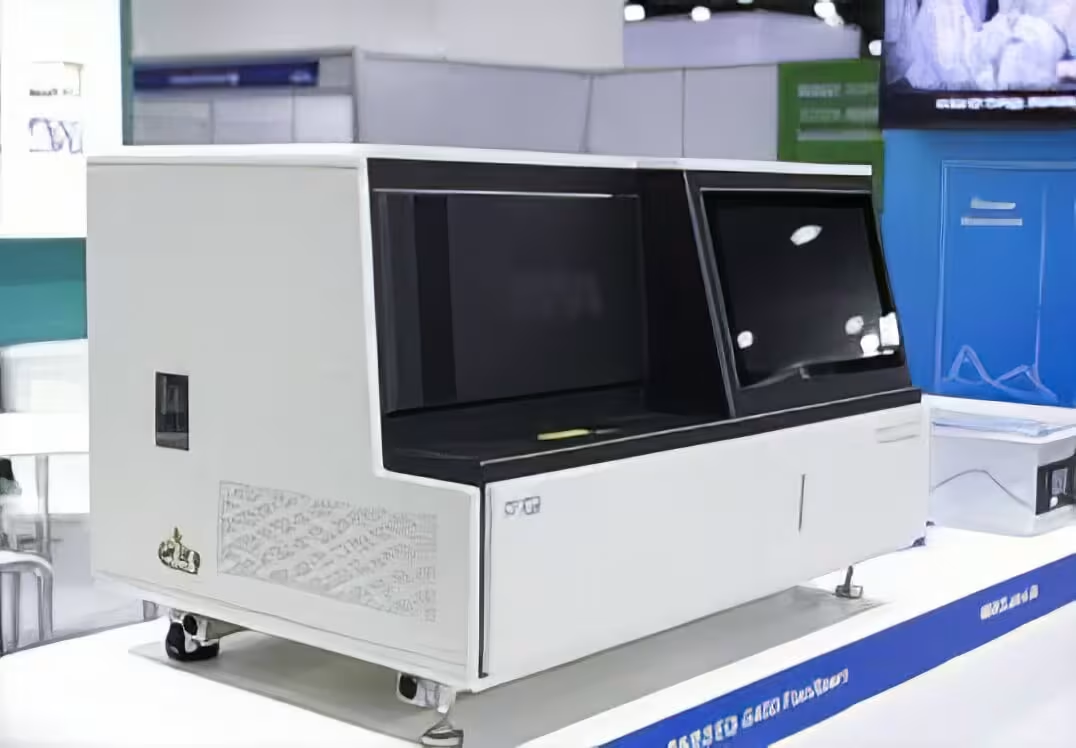
The Massive Parallel Sequence Unit (MPSU) of the National and Kapodistrian University of Athens (NKUA) is designed to constitute a leading center for high-throughput genomic sequencing and analysis. Established in 2024, the facility provides state-of-the-art sequencing capabilities to support scientific research and education. It serves a diverse range of users, including academic researchers, industry professionals, and governmental agencies.
The Sequencing Facility of NKUA provides interdisciplinary research, allowing the implementation of collaborations within NKUA and with external partners. It supports a wide array of projects, from fundamental research in genomics, metagenomics, molecular medicine, clinical diagnostics as well as population studies. Collaborative efforts often lead to groundbreaking discoveries and innovations supported by the facility’s advanced sequencing capabilities